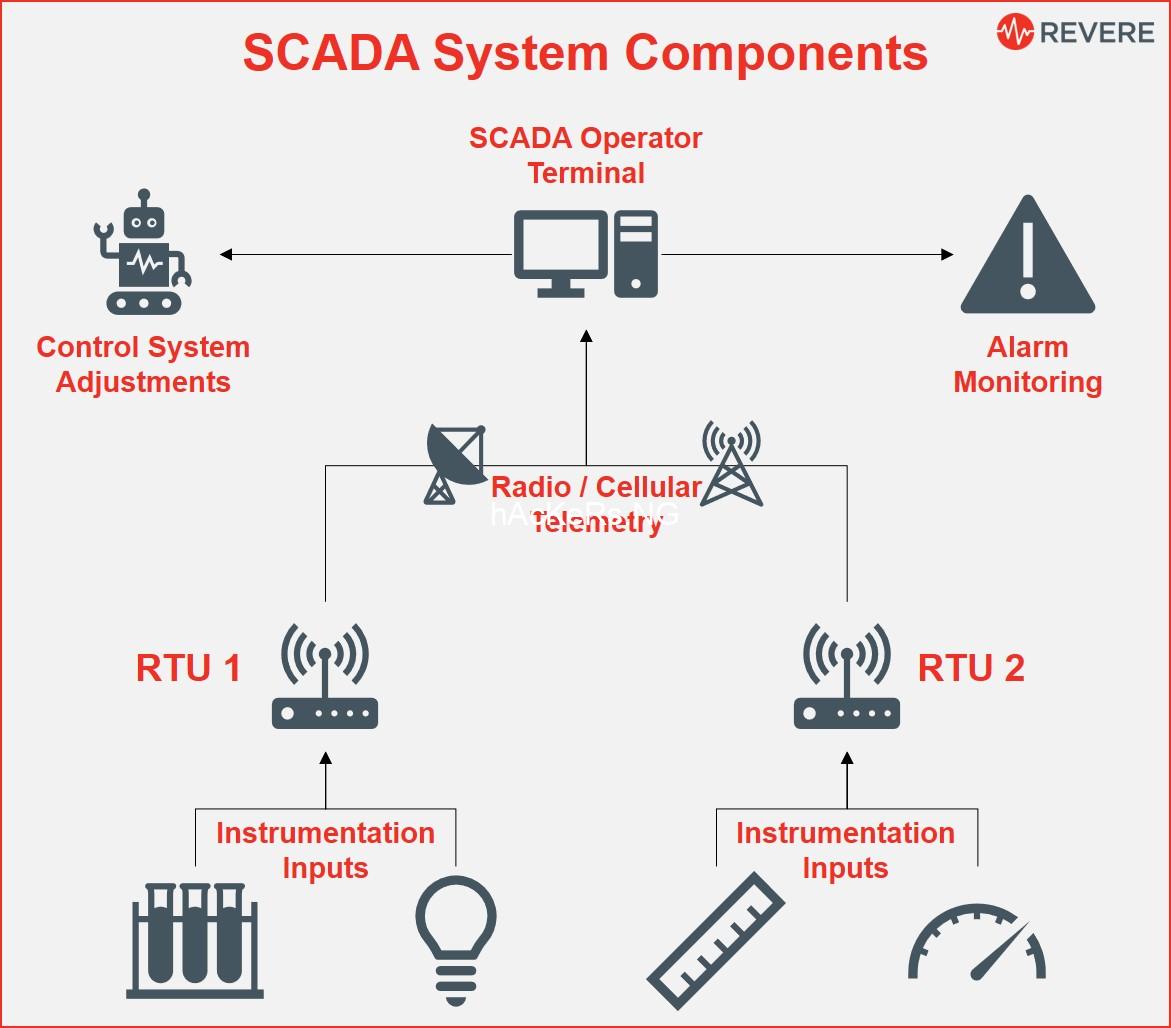
SCADA (Supervisory Control and Data Acquisition) systems are specialized control systems used for monitoring and controlling industrial processes and infrastructure. These systems are essential in industries where real-time monitoring and control of equipment and processes are crucial, such as manufacturing, energy, water treatment, transportation, and utilities.
Key Components of SCADA Systems:
- Human-Machine Interface (HMI):
- Purpose: Provides a graphical interface that allows human operators to interact with the SCADA system, monitor the status of the controlled processes, and issue commands.
- Example: An operator using the HMI to adjust the temperature settings in a chemical processing plant.
- Supervisory (Control) System:
- Purpose: Centralized system that collects data from sensors and field devices, processes it, and displays the information on the HMI. It may also send control commands to field devices.
- Example: A SCADA server that gathers data from various pumps and valves in a water treatment facility and issues commands to regulate water flow.
- Remote Terminal Units (RTUs) or Programmable Logic Controllers (PLCs):
- Purpose: RTUs and PLCs are field devices that communicate with the central SCADA system. They collect data from sensors and execute control commands from the supervisory system.
- Example: An RTU monitoring the pressure in a gas pipeline and sending this data to the SCADA system for analysis.
- Communication Infrastructure:
- Purpose: Facilitates the transfer of data between the SCADA central control system and remote field devices (RTUs/PLCs). Communication can be wired (e.g., Ethernet) or wireless (e.g., radio, satellite).
- Example: A wireless network connecting remote oil wells to a central SCADA system for continuous monitoring and control.
Applications of SCADA Systems:
- Utilities: Managing electrical grids, water treatment plants, and waste management systems.
- Manufacturing: Monitoring assembly lines, controlling robotic devices, and managing automated processes.
- Energy: Supervising oil and gas pipelines, power generation plants, and distribution networks.
- Transportation: Controlling railway systems, traffic lights, and airport operations.
Security Concerns:
SCADA systems are often critical infrastructure, making them targets for cyberattacks. These systems were traditionally isolated from other networks, but as they become more connected, cybersecurity becomes a significant concern. Protecting SCADA systems involves implementing strong access controls, encryption, network segmentation, and continuous monitoring for threats.
In summary, SCADA systems are vital for the efficient and safe operation of industrial processes, enabling real-time data acquisition, monitoring, and control over vast, complex systems.